7 Common Kitchen Decor Mistakes That Make Your Space Look Dated
Small, fixable choices — flat lighting, crowded counters, matched finishes — date a kitchen far more than...

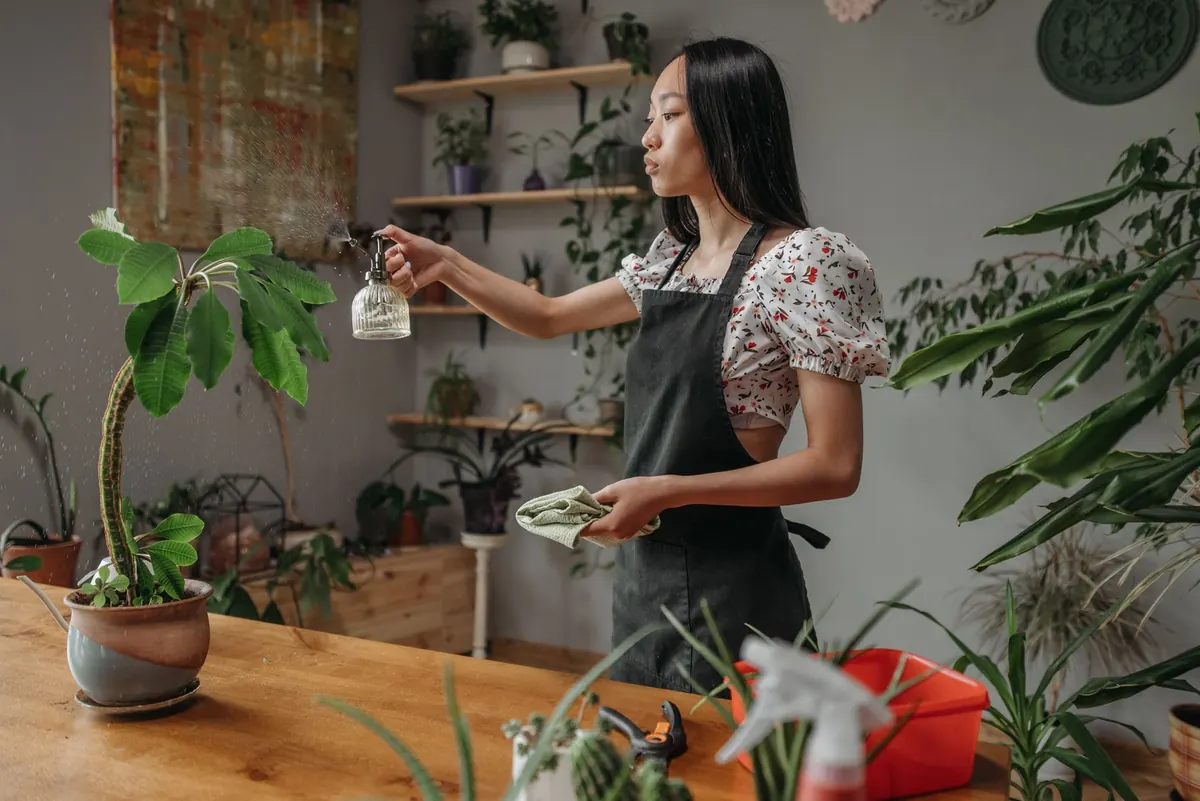
Walk into a room with one well-placed fern, a wool throw, and afternoon light falling across a wooden floor, and something in your shoulders drops. That reaction is not sentimental. It is the whole idea behind biophilic design: a room that keeps a small, steady conversation going with the outdoors tends to feel calmer, larger, and easier to live in. You do not need an architect or a big budget to get there. You need a handful of deliberate decisions about light, material, plant life, and air — and the patience to let them settle in.
Biophilic design is the practice of building nature into a space, not as decoration but as a working part of the room. It covers everything from a window that frames a maple tree to the grain of an oak table to the sound of rain on a metal roof.
Two ideas keep it from turning into a shopping list. The first is direct experience: real plants, real daylight, real wood, air that actually moves. The second is indirect experience, where a material or shape reminds you of nature without being alive — a stone countertop, a linen curtain, a wallpaper of tall grasses.
That third one is the most overlooked. A reading chair tucked slightly behind a bookshelf, facing a window, gives you the same comfort a covered porch does. Shelter plus prospect. Once you notice it, you start seeing it everywhere.
Before you buy a single item, count the daylight your main rooms actually get. Then deal with the three things that steal it: curtains that stay closed all day, furniture pushed against windows, and dark paint on a north-facing wall.
Small pools of warm light at eye level read a little like candlelight, and candlelight is what a garden feels like after sunset. Keep bulbs warm rather than blue, and put a dimmer on at least one lamp.
Most plant advice fails because it hands a beginner a fiddle-leaf fig and a watering can. Start with plants that forgive neglect: pothos, snake plant, ZZ plant, spider plant, heartleaf philodendron. Match the plant to the light you actually have — a snake plant in a dim hallway, a jade plant on a bright sill — and you will keep them. Water less often than feels right, and let the top inch of soil dry out for most of them.
Placement matters more than quantity. Group plants in threes so they form a mass of green instead of a lonely pot. Cluster them to keep humidity up around the leaves. Put the tallest one on the floor so greenery registers at more than one height in the room. Rotate pots a quarter turn every week or two so they grow evenly toward the light.
If you reliably kill plants, a large dried arrangement, a preserved moss frame, or a bowl of eucalyptus on the coffee table still delivers the texture and the softness. There is no shame in knowing your limits.
Choose finishes with visible variation: wood, stone, clay, linen, wool, rattan, cork, leather. The enemy is not modern design, it is uniform surfaces — a laminate print that repeats every twelve inches, plastic pretending to be something it isn't. Real materials age, and the ageing is the point.
A simple rule: pick one dominant natural texture per room and repeat it twice. Oak floor, oak shelf, oak stool. Then add one contrasting texture — a chunky wool throw on a linen sofa, a rough stone tray on a smooth wooden table. Contrast is what keeps a natural palette from going flat.
Build your palette from a photograph of a place you love, but zoom in close: bark, lichen, wet sand, moss after rain. That gives you muted greens, warm greys, clay, oatmeal, faded denim. Then keep one saturated accent so the room has a pulse — a deep green cushion, a rust-coloured ceramic bowl, a navy blanket.
Straight lines and right angles are human inventions. Nature works in curves, branches, spirals, and repetition that never repeats quite perfectly. You can borrow that vocabulary without much effort.
Ferns, leaves, and coastlines all share a fractal quality: the same shape at different scales. Echo that idea across a room — a vase of eucalyptus near a print of ferns near a softly patterned rug — and the eye reads the connection without being told.
Biophilic design is not only visual. Sound, scent, touch, and moving air do a lot of quiet work.
If you have allergies, asthma, or sensitivity to fragrance, keep live plants and diffusers modest and ask a doctor what belongs in your home rather than guessing.
Do these one at a time, and give each change a few days before you judge it.
Biophilic design rarely works as a single overhaul. It works the way a garden works — a little at a time, with attention to what is already growing in the space you have. Start with light and one green thing. The rest tends to follow.
Photo: ROCKETMANN TEAM / Pexels
Small, fixable choices — flat lighting, crowded counters, matched finishes — date a kitchen far more than...
Smart layout, double-duty furniture and vertical storage let small city apartments feel open without...
Ten countertop items worth keeping out, plus placement rules, zone planning, and a five-minute reset that...