7 Common Kitchen Decor Mistakes That Make Your Space Look Dated
Small, fixable choices — flat lighting, crowded counters, matched finishes — date a kitchen far more than...


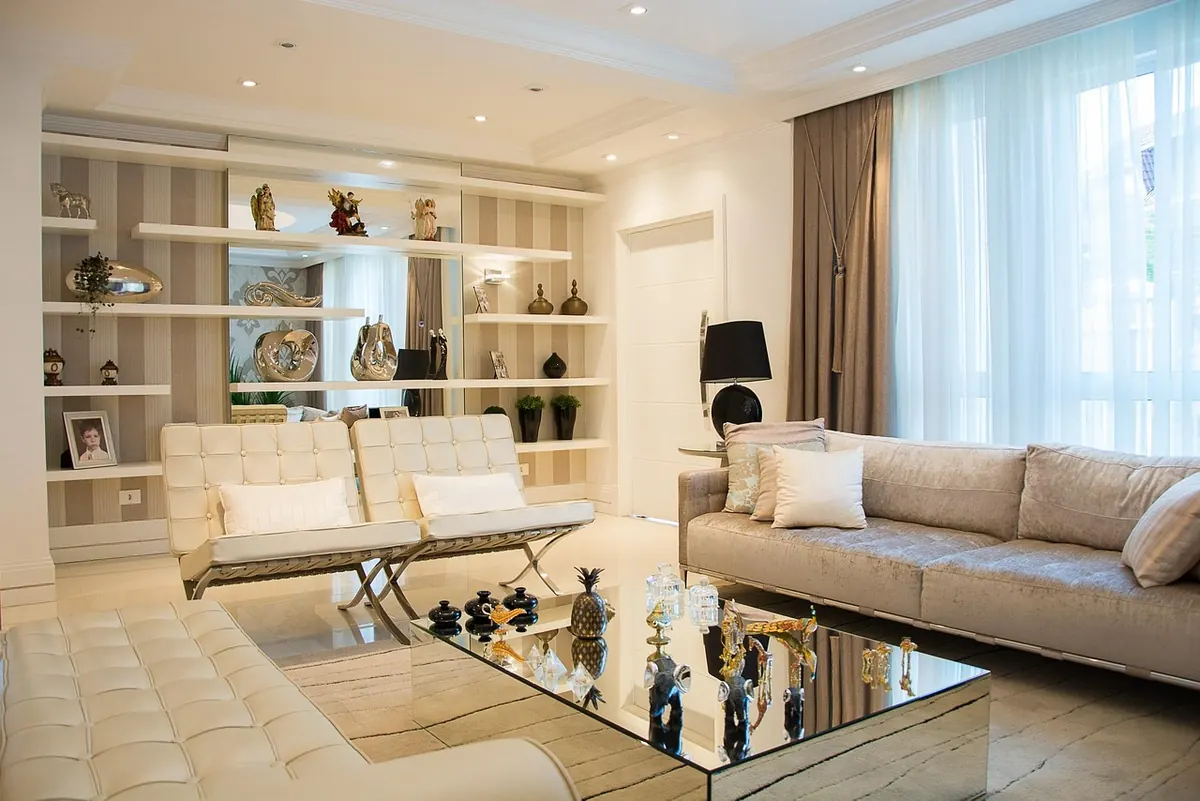
Walk into most living rooms after dark and you'll find the same scene: one ceiling fixture turned up high, a couple of dark corners, and a sofa nobody wants to read on. It works, technically. It just doesn't feel good.
The problem isn't the fixture. It's that a single light source can only do one job at a time. Layering means using several sources at different heights, brightnesses and directions, so the room can shift from movie night to homework to hosting without a trip to the hardware store. Here's how to build it in three steps, even if you're starting with nothing but a bare bulb.
Every well-lit living room is doing three jobs at once, and each one maps to a layer:
No single fixture has to do all three. A floor lamp plus a dimmed overhead will light a room far better than either one alone — and it almost always looks better than one bright ceiling light doing its best impression of a hospital corridor.
Light the room, light the person, light the thing you want to show off.
Ambient light is the foundation, so start there. Your goal is even, soft light with no hard shadows and no glare bouncing off the television.
If you have a ceiling fixture, put it on a dimmer. That single change turns a harsh overhead into something you can actually relax under. Most dimmable LED bulbs work with standard dimmers, but check the compatibility list on the packaging — mismatched bulbs and dimmers are the usual reason a light buzzes or flickers at low settings.
If your ceiling isn't an option, fake ambient light with two or three lamps positioned so their shades bounce light off the walls and ceiling. Aim for sources on different sides of the room. One lamp reads as a spotlight; two read as room light.
A workable rule of thumb for general living room lighting is roughly 10 to 20 lumens per square foot. A 200-square-foot room lands somewhere between 2,000 and 4,000 lumens spread across all your fixtures — not concentrated in one. Treat that as a starting point, then trust your eyes: if you squint when the lights come on, you have too much.
This is where beginners usually stop short. They buy one floor lamp, park it in a corner, and wonder why the sofa still feels dim.
Task lighting belongs wherever a person sits or works. A floor lamp beside the armchair. A table lamp on the side table between sofa and chair. A slim swing-arm sconce above a reading nook if floor space is tight. A low lamp on the console behind the sofa, so the wall glows and the seating area doesn't feel like a cave.
Height matters more than wattage. When you're seated, the bottom of the lampshade should sit roughly at eye level or just below — around 40 to 42 inches from the floor for most sofas and chairs. That way light falls onto your book or your lap instead of straight into your eyes. A shade set too high gives you glare; too low and it blocks the light entirely.
Three-way bulbs or a dimmable lamp let you go from bright for reading to soft for conversation without switching fixtures. If you only upgrade one thing in the room, upgrade the lamp next to your favourite seat.
Accent light is the layer that makes a room look finished rather than merely furnished. It's dim, it's directional, and it usually points at something.
Good candidates: a small picture light over a large piece of art, a plug-in light on a bookshelf, an uplight behind a potted plant to throw leaf shadows across the wall, an LED strip tucked under a floating shelf, or a pair of candlesticks on the mantel. None of these need to be expensive. They need to be aimed.
Keep accent light noticeably dimmer than everything else — roughly a third of the brightness of your task lighting is a comfortable starting point. If you can see the bare bulb or a bright hotspot from where you sit, angle the fixture differently or add a shade. Accent lighting also does quiet work after dark: it gives your eye somewhere to rest, so the room doesn't feel like a waiting area.
One detail separates a layered room from a messy one: consistency.
Stick to warm white bulbs in the living room — 2700K to 3000K — and use the same range across all three layers. A 2700K lamp sitting next to a 5000K daylight bulb makes one corner look yellow and the other blue, and the whole arrangement starts to feel accidental.
Walk your room at night, turn on whatever you already own, and answer these:
Most people find they need one or two purchases, not a whole new scheme.
Turning everything on at once will make the room feel busy. Real layering shows up in how you use the switches.
A simple evening setup: overhead dimmed to about a third, one task lamp on beside whoever's reading, accent lights low. When guests arrive, swap the reading lamp for a softer table lamp and bring the overhead up slightly. For a film, kill the overhead completely and leave only the accents.
Live with it for a week before you buy anything else. You'll quickly notice which layer is missing at eight in the evening and which one you never touch — and that's the best shopping list you'll ever have.
Photo: fietzfotos / Pixabay
Small, fixable choices — flat lighting, crowded counters, matched finishes — date a kitchen far more than...
Smart layout, double-duty furniture and vertical storage let small city apartments feel open without...
Ten countertop items worth keeping out, plus placement rules, zone planning, and a five-minute reset that...